Independent UK editors
About Green Loop Living
Green Loop Living is an independent editorial site about reducing household waste in the UK, with a focus on practical habits and upcycling. We are not a shop, and we do not sell products. This page explains who writes the guides, how they are researched, and how to flag anything that looks out of date.
A reading site, not a shopfront
What you will find here
- Step-by-step guides for zero waste living at home, written in plain English
- Kitchen, shopping and upcycling projects tested in ordinary flats and houses
- Starter resources for anyone new to low waste habits, plus a way to send corrections
No checkout, no basket, no sponsored placements inside guide content.
Most people who arrive here are trying to reduce what they throw away without turning their week into a project. That usually means starting with the kitchen, the shopping list, or a cupboard of glass jars that were going in the bin. Our guides are written for that starting point, not for a workshop bench.
The site covers the full loop: how to reduce household waste before it arrives, what to do with what is already in the house, and where an item genuinely belongs when it leaves. You will find a zero waste starter kit path, a low waste home guide, kitchen and shopping swap pages, an upcycling projects library, and a composting at home set of instructions with UK council differences spelled out.
We keep the writing practical. Where a method depends on conditions — how long a beeswax wrap lasts, whether a compost bin in a small garden will get hot enough — we give the range and say what affects it, rather than a single tidy number.
Who runs the site
Green Loop Living is run by a small editorial team based in the UK. We write the guides ourselves and test the methods we describe, mostly at home and in ordinary flats and houses without workshops or specialist equipment. The site has no parent company and no product line to sell.
- Who writes
- A small in-house editorial team. Guides are written by the people who test them, not commissioned from outside writers.
- Where we test
- Normal domestic settings: rented flats, terraced houses, small kitchens and modest gardens. If a method needs a workshop or specialist gear, we say so and usually leave it out.
- Who pays for it
- Nobody buys placement in our guides. There is no parent company and no product line behind the site.
- Where we are
- 42 Bramley Road, Bristol, BS6 5BT, United Kingdom. The site is written for UK households, so council rules and shop formats are the ones we reference.
How we research
Where a claim depends on conditions, we say so
Beeswax wrap lifespan and compost bin behaviour are two examples where the honest answer is "it depends," and we give the ranges rather than a single number.
How guides are researched
We use published UK council guidance, manufacturer care instructions, and our own testing. Where rules differ between local authorities, we point out the difference instead of picking one version and presenting it as national.
-
1
Read the official guidance first
For anything a council collects — food waste, garden waste, glass, textiles — we start with published local guidance and note where it varies across the UK.
-
2
Then test the method at home
Glass jars, old clothing, food storage and cleaning routines get tried in a normal kitchen with a normal sink. If something only works with equipment we do not own, it is flagged or left out.
-
3
Write the ranges, not a slogan
Care instructions for reusable items vary by manufacturer. We give practical ranges and name what shifts them — heat, washing, humidity, how full a bin is — so you can judge your own setup.
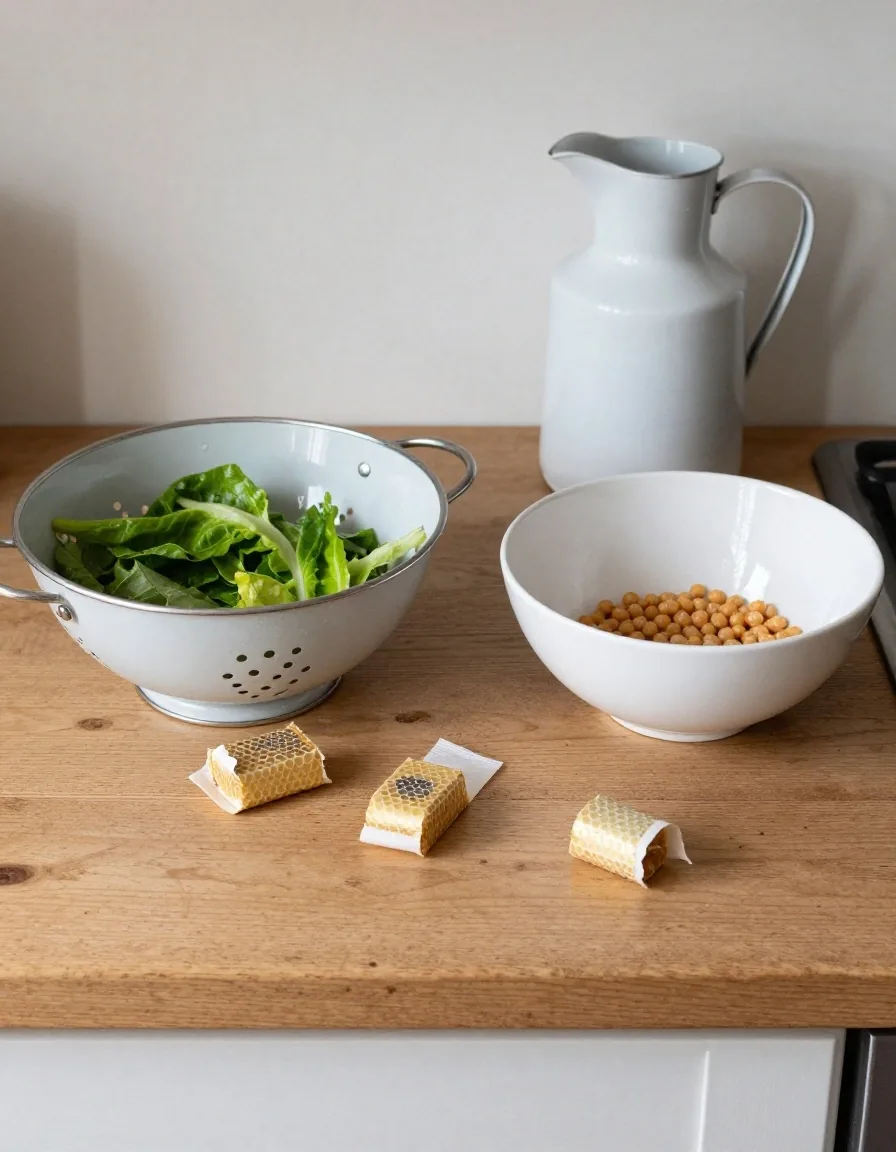
Wraps lose their tack as they age and after contact with heat. We give a working lifespan range and the care steps that keep them usable longer, rather than one number that will not match your kitchen.
Why we avoid invented statistics
You will not find user counts, awards, or study citations on this site unless we can point to the source. Sustainability writing is full of numbers with no origin, and we would rather leave a gap than fill it with a made-up figure. If a guide cannot answer something, we say that too.
What we publish
- Methods we have tried ourselves, with the conditions written next to them
- Ranges instead of single figures when a result depends on heat, humidity or product brand
- Named sources when a rule comes from council or manufacturer guidance
- Signposted small print: what a guide does not cover, and where to check instead
What we leave out
- Round numbers with no explanation of where they came from
- Badges, awards and certification marks we cannot verify
- Study citations reproduced without checking the original paper
- A tidy answer when the honest answer is that it varies by council
Editorial independence
We do not run affiliate links inside guide content. If a guide mentions a type of product, it is because the method needs it, not because someone paid for the mention. Any future commercial relationship would be stated clearly on the page where it appears, not only in a footer.
Where a guide names a category — a reusable produce bag, a plastic free food storage container, a bulk-buy scoop — it is because the method calls for something in that category, and the guide works with what you already own wherever possible. We would rather describe the job the item does than point you at one brand.
That also means you will not find sponsored shopping round-ups here. If we ever add a commercial element, it will appear on the exact page it relates to, labelled, and never inside the advice itself.
How often content is reviewed
Guides are reviewed when UK guidance or common products change, and when readers flag errors. Composting and recycling rules vary by council, so those pages are checked against current guidance more often than others. If something is out of date, the contact page has a form for corrections.
Checked against council guidance
Composting at home, food waste and kerbside recycling pages are re-read whenever collection rules change or a council updates what it accepts.
Checked when products change
Reusable items move on: washing instructions, materials and pack sizes shift. Kitchen swap and storage pages get a pass when that happens.
Updated when readers write in
A correction from someone who lives with the rule every day beats our own second reading. Send what you spotted and we will look at the page.
We do not date-stamp every paragraph. What we do instead is keep the pages closest to changing rules under the most frequent review, and tell you plainly when a guide is describing something that varies.
What we do not cover
We write about household habits in the home. Some things sit outside that scope, and we would rather tell you now than waste your time. We do not cover commercial waste disposal, industrial composting, or product reviews.
We do not provide legal or safety advice beyond the standard precautions stated inside the guides, such as never mixing certain cleaning chemicals, or checking with your council before burning garden material. For anything safety-critical, follow official guidance rather than a website, including this one.
- No business or trade waste services
- No industrial or commercial-scale composting
- No scored product reviews or buying rankings
- No legal, medical or regulated safety opinions
How to get in touch
Questions, topic suggestions, and corrections are all welcome through the contact page. We read everything that comes in and reply where a reply is useful. If you are not sure whether something is worth sending, send it anyway.
- Address
- 42 Bramley Road, Bristol, BS6 5BT, United Kingdom
- Phone
- +44 117 496 0283
- [email protected]
- Hours
- Monday to Friday, 9:00 AM – 6:00 PM; Saturday, 10:00 AM – 2:00 PM