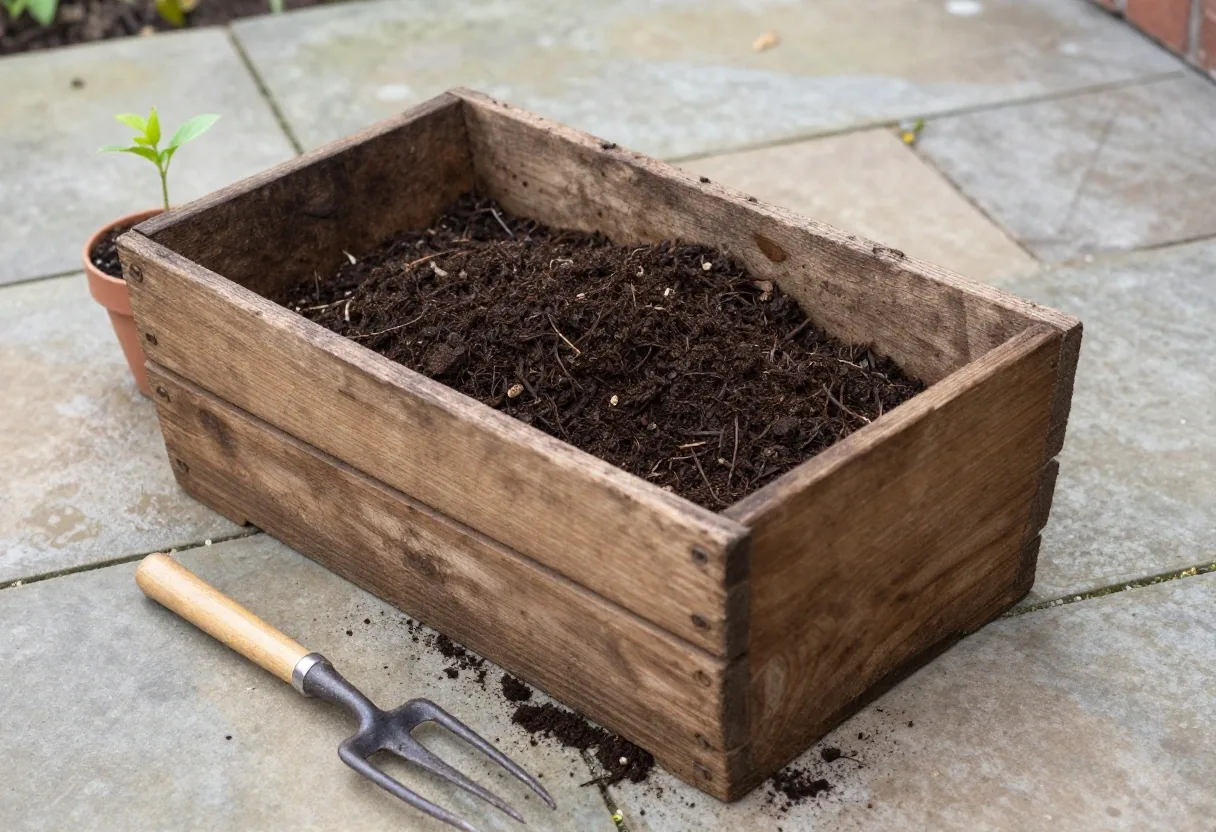
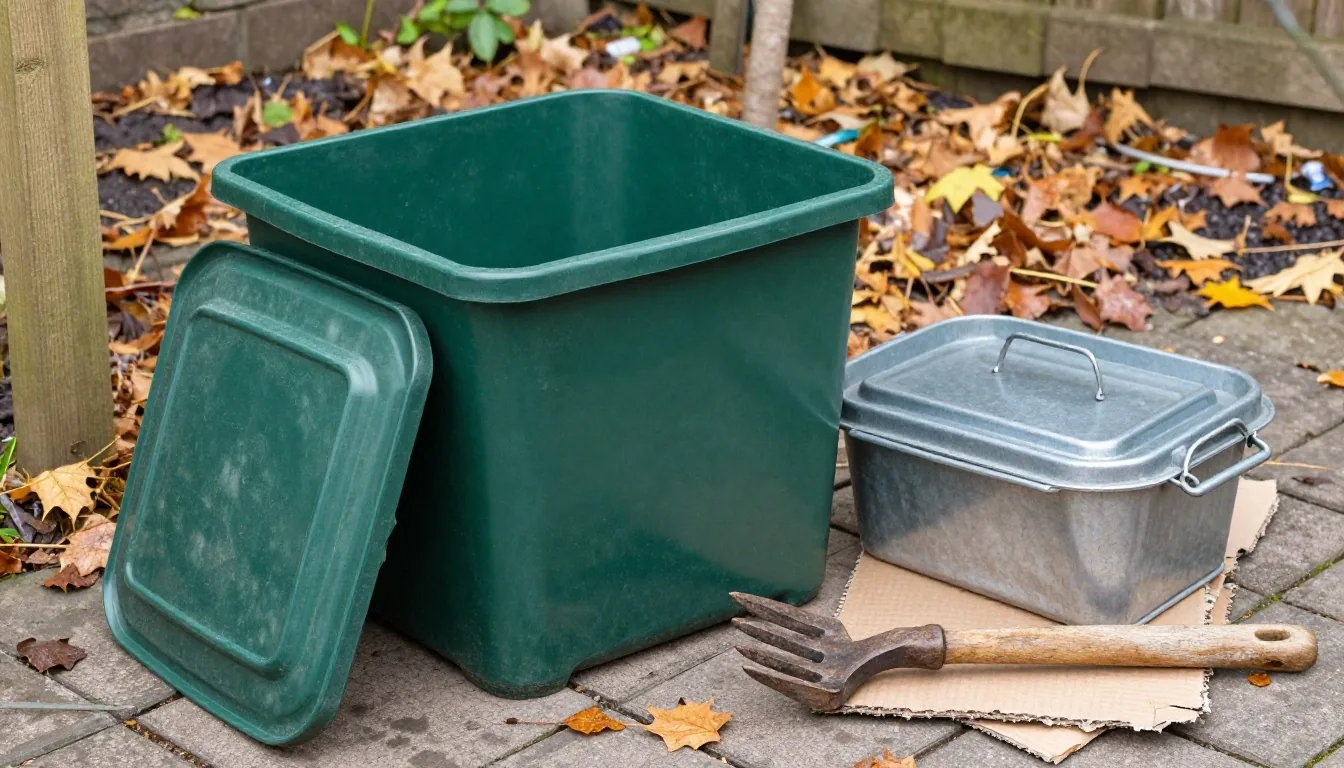
An open garden compost bin with a lidded kitchen caddy and a pile of brown cardboard beside it in a small UK back garden

Composting at home

How to compost food scraps at home

Food scraps are usually the heaviest part of a UK household bin, and they are the part most easily diverted. This guide covers composting in small spaces, what can and cannot go in, and the three problems that stop most beginners: smell, flies, and a bin that never seems to break down.

Start with your council collection if you have one

Many UK councils collect food waste separately, and a few collect garden waste too. Where that service exists, the whole job is a small countertop caddy with a lid that you empty into the outdoor bin as it fills. No turning, no brown-to-green ratio, nothing to learn.

Check first

Look up your council's food and garden waste page before you spend anything. It tells you what they accept, whether liners are allowed, and how often the bin is emptied.

Then buy

Only after that, pick a caddy that fits your counter and a bin that fits your collection. Skip the equipment if your kitchen is tiny — a lidded tub from the cupboard does the same job.

If your council collects food waste, you are already diverting the heaviest part of the bin. Anything you do on top of that is a bonus, not a requirement, and it is the simplest way to start a low waste home guide routine without buying a single new thing.

If you have a garden or balcony

A basic bin works for most households with any outdoor space

You need a mix of green material and brown material, roughly equal parts by volume, and you need it about as damp as a wrung-out sponge.

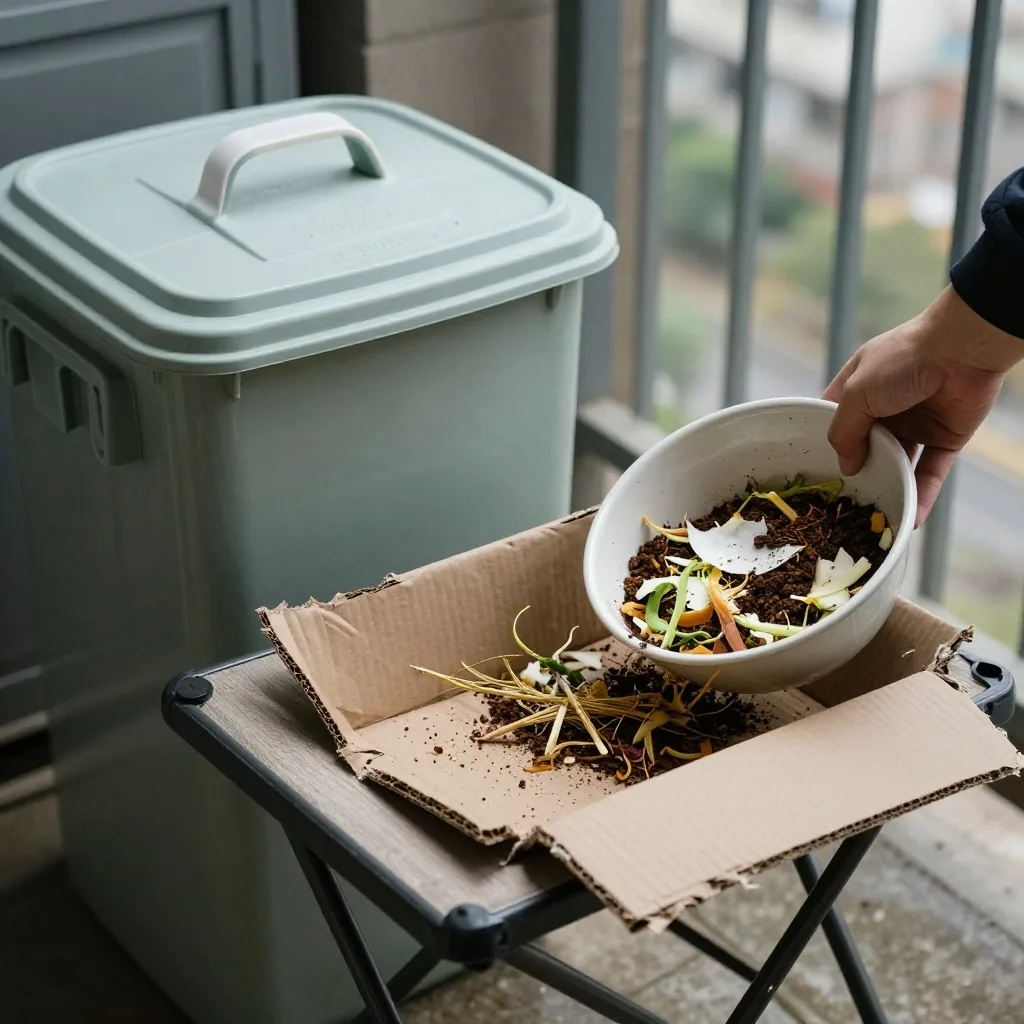
Vegetable peelings being tipped from a bowl onto torn cardboard inside a small compost bin on a balcony
Balcony bins work if you keep the mix and the moisture right.

The five things that decide whether it breaks down

Greens

Vegetable scraps, fruit peel, grass clippings and coffee grounds supply the nitrogen that gets the pile working.

Browns

Shredded cardboard, plain paper, dry leaves and egg boxes supply the carbon that stops the bin turning sour.

Moisture

Too dry and nothing happens. Too wet and it smells. Aim for a wrung-out sponge and check after heavy rain.

Air

Turn the contents with a fork every couple of weeks. Air is what separates composting from rotting.

Particle size

Chop scraps and tear cardboard into palm-sized pieces. Smaller pieces break down noticeably faster.

What can and cannot be composted

The list is shorter than most people expect. If you stick to the left column and keep browns on top of every addition, a home bin in a UK garden or on a balcony will do the rest.

Safe for most home bins

  • Vegetable and fruit scraps, including peelings, cores, stalks and soft salad leaves
  • Coffee grounds and paper filters, plus loose tea leaves and torn tea bags
  • Crushed eggshells, which add grit and break down slowly
  • Plain cardboard, egg boxes, loo roll tubes and uncoated paper, torn up small
  • Garden clippings, dead houseplant leaves and spent cut flowers

Keep out of a home bin

  • Meat, fish, bones and skins — they attract animals and smell quickly
  • Dairy, including cheese rinds and milk leftovers
  • Cooked food, oils, sauces and anything that has been through a fryer
  • Pet waste, including cat litter and dog mess
  • Anything labelled compostable, unless your council's industrial facility explicitly takes it

Why the compostable label is not a green light

Home bins rarely reach the sustained heat that industrial composting relies on. PLA-lined cups, compostable bags and moulded trays need far higher temperatures than a domestic bin ever reaches, so they sit there intact for a year and take up space that real scraps could use. Check the council's list once, and you will know where yours belong.

When something is off

Three problems that stop most beginners

Nearly every home composting question comes down to one of these. Each one has a cause you can fix in an afternoon, and none of them are a reason to abandon the bin.

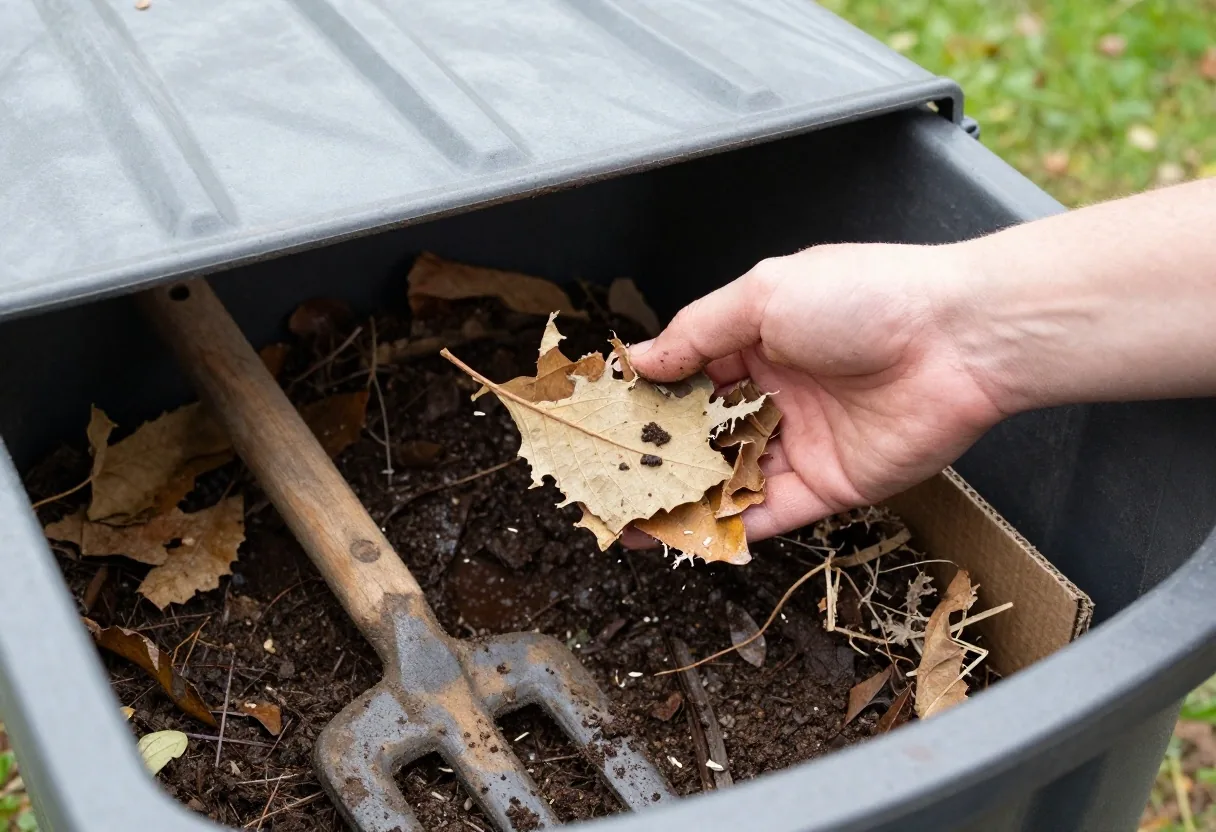
A hand adding torn cardboard to an open domestic compost bin in a small garden

Problem one: smell

Smell almost always means too much green material and not enough brown. Mix in shredded cardboard or dry leaves and turn the contents so the new browns reach the wet layer underneath. If the smell turns sharp and sour, the bin is too wet rather than too rich. Leave the lid off for a day in dry weather, then put it back. A balanced bin smells faintly of the forest floor, never rancid.

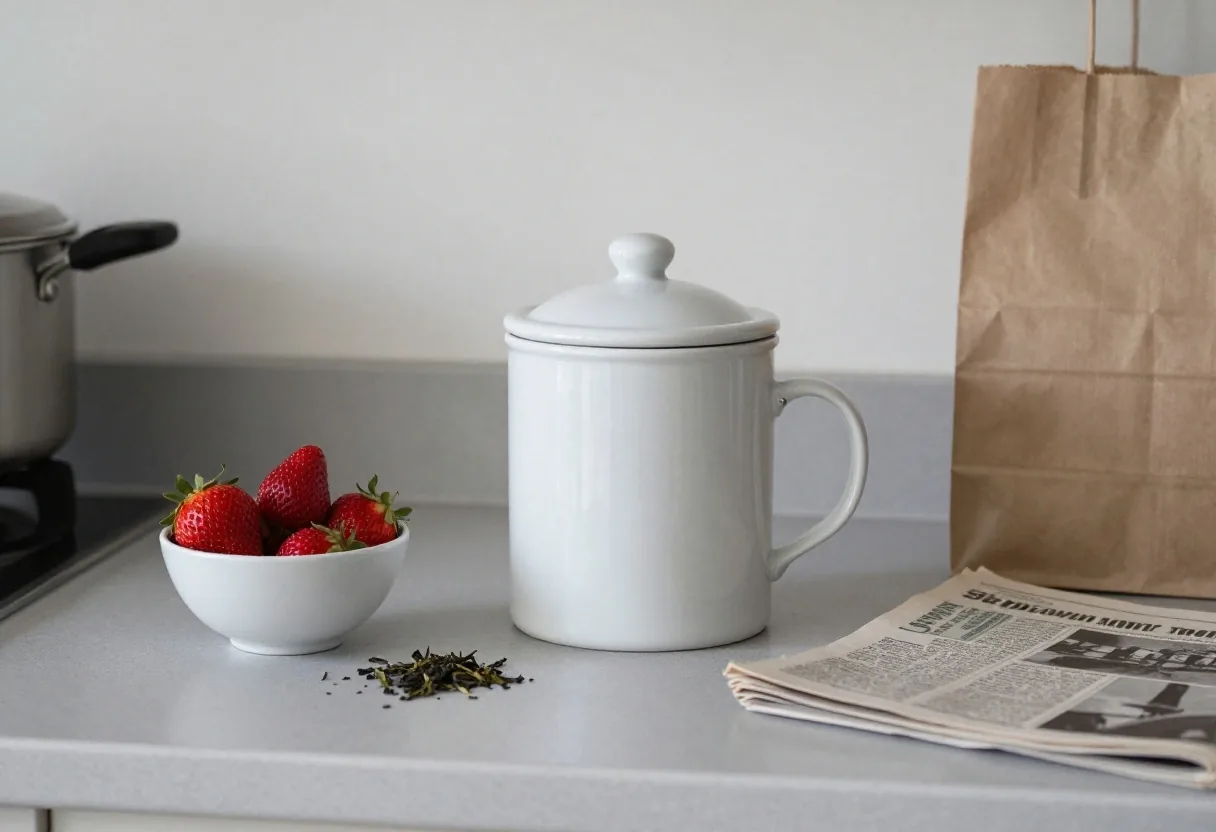
A lidded kitchen food caddy on a worktop beside a bowl of fruit scraps and a brown paper sheet

Problem two: fruit flies

Flies come for exposed scraps, and fruit is the biggest draw. Keep a lid on the indoor caddy and empty it every day or two rather than when it is full. Outside, bury each new addition under what is already in the bin and finish with a layer of brown material on top. This is a handling problem, not a sign that the bin cannot work.

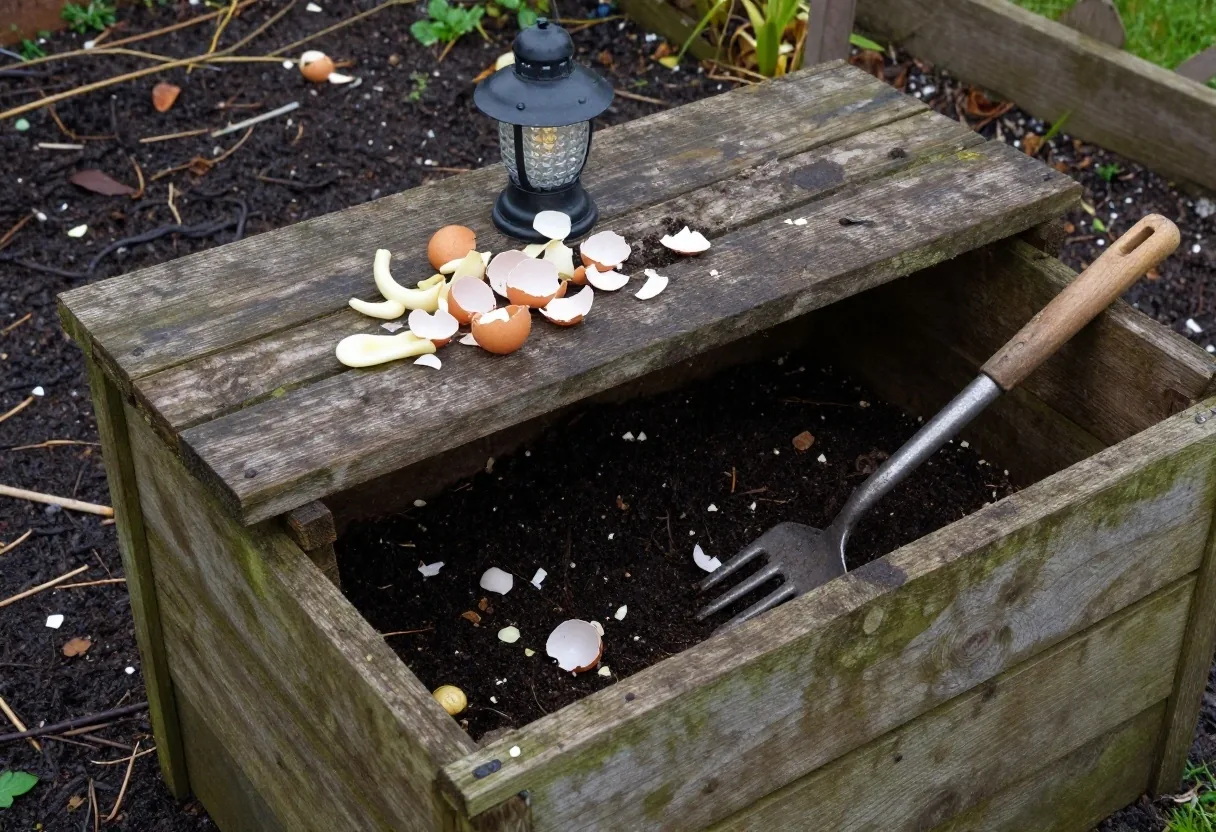
An open garden compost bay with unfinished scraps on top and dark crumbly compost at the base

Problem three: a bin that never breaks down

If nothing seems to be happening, the pile is probably too dry or short of green material. Add vegetable scraps and a little water, then turn it. Cold weather slows everything down, which is normal rather than broken: a bin started in autumn may not give you compost until the following summer. Give it a full year before you judge it.

When you are done composting

Finished compost looks like dark, crumbly soil with no recognisable scraps left in it. Use it on garden beds, in pots, or dug into a border before planting. Nothing else needs doing.

If you have no garden and your council collects food waste, you are already doing the useful part. The next gain is not a better bin — it is buying and cooking so that less food ends up as scraps in the first place.

Hands holding finished dark crumbly compost over a plant pot in a garden

Fully broken down compost: dark, crumbly, and free of anything you can still identify.

Questions people ask before they start

Practical answers to the things that come up in the first weeks. If your situation is not covered, ask us directly and we will point you at the right guide.

Ask a composting question
Can I compost without any outdoor space at all?

Without a garden or balcony there is no realistic home bin. A wormery fits a cupboard or a shaded corner but needs more attention than most beginners expect, and it still needs somewhere to drain. If your council collects food waste, that is the honest answer; if not, keeping scraps in the freezer until bin day cuts the smell and the flies.

How long until I get usable compost?

In a warm UK summer, a well-managed bin can give you compost in a few months. Started in autumn, expect the following summer. Temperature does most of the work: breakdown slows sharply in cold weather and speeds up again in spring, so a quiet winter bin is normal.

Do I need to buy a special bin?

No. Any lidded container with drainage holes and an open base does the job, including a bin bag frame, a wooden pallet bay or a drilled storage box. A classic plastic compost bin is convenient rather than necessary, and buying one second-hand is often the cheapest option.

Can I add paper and card from the recycling bin?

Plain paper, newspaper, egg boxes and uncoated card are excellent browns. Glossy magazines, laminated card, receipts and anything with a plastic window or heavy tape should stay out — they do not break down and they leave fragments in the finished compost.

Will it smell if it sits in the kitchen?

A lidded caddy emptied every day or two is fine in most kitchens. Line it with a sheet of newspaper or a paper bag rather than a plastic liner, keep it out of direct sun, and give it a rinse when you take the scraps out. The smell people remember comes from scraps left for a week, not from a caddy used properly.

Where to go next

Keep the loop going after the bin

Composting handles what is left after cooking. The bigger saving sits upstream: buying the right amounts, storing food so it lasts, and reusing what you already own. These two guides pick up where this page stops.

Read the kitchen swaps guide
See the low waste home guide Practical upcycling projects for the things you already own Start with the zero waste starter guide

Green Loop Living is an editorial resource for UK households. We write the guides; we do not sell bins or equipment. If you would rather ask a human, write to [email protected] or call +44 117 496 0283, Monday to Friday 9:00 AM to 6:00 PM, Saturday 10:00 AM to 2:00 PM.